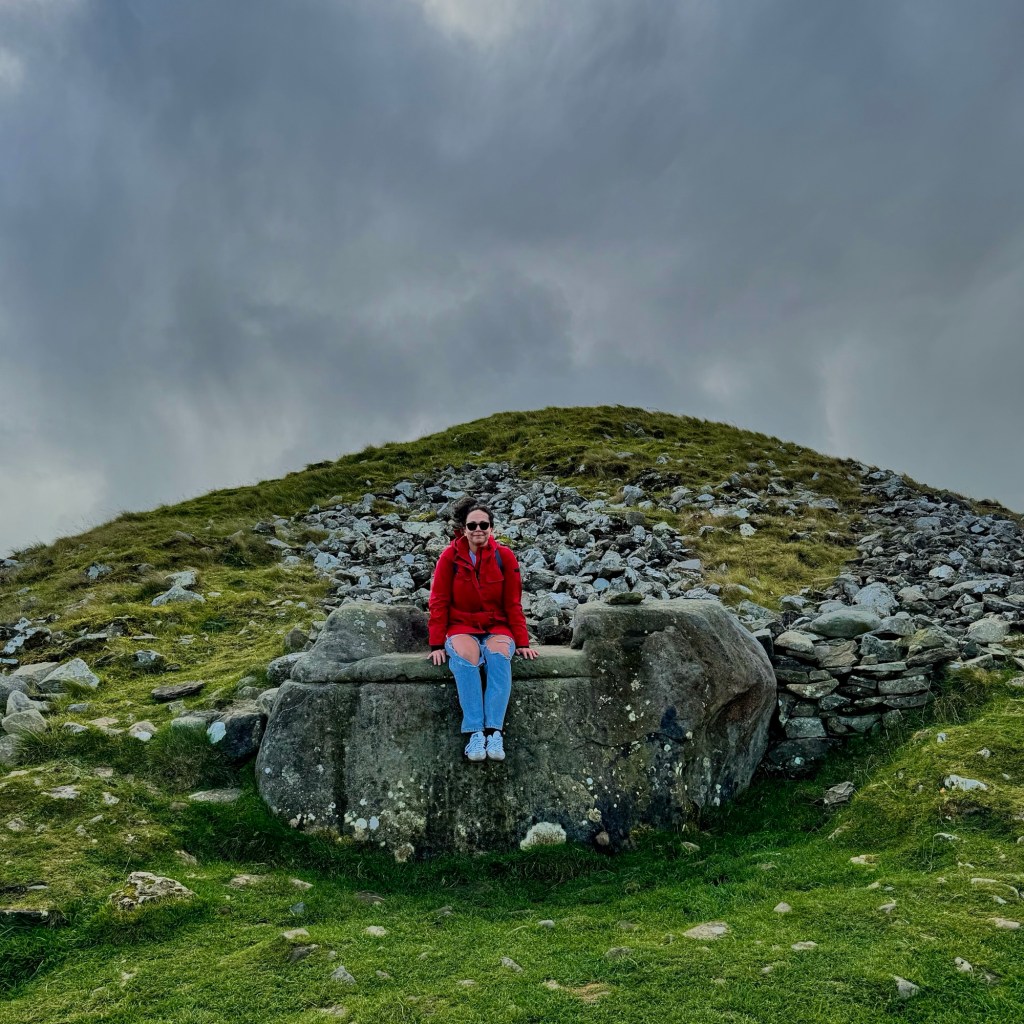
Recently I’ve been asked a question quite a bit: do I have any suggestions for a first time visit to Europe? Safety is mentioned along with the question – some single women; some with children. While I don’t claim to be a travel expert, nor can I pretend that I too wasn’t once nervous about my first trip to Europe – or now, a trip into an unknown city or country – I do have some suggestions and considerations I think I can share.
Safety can sometimes be a subjective concept. It can be physical and it can be an abstract comfort. Without plunging into the divisive arena of politics, I feel vastly safer living in Europe than I ever did living in America – physically safer. Have I felt more comfortably safe? I do, but very often do not. We all feel safe in the known, in the familiar. We have less fear traveling within our own states, cities, country because it is what we have grown up with. Traveling to another country takes us outside of that comfort zone. And it should.
I follow Kacie Rose on Instagram who constantly reminds us: do the shit that scares you! Step outside of that comfortable safety net and step into an unknown. Seek what isn’t familiar; taste a new language on your tongue and laugh with the locals as they correct your pronunciation; try the haggis, I promise you it’s delicious; drive on the “wrong” side of the road, and see the city lights at night. Diving head first into the unknown is what builds us and shapes us. It teaches us some of the most important of life’s lessons.
Speaking on the physical safety – certainly there are some places that are safer than others – especially for the single or first time traveler. Some places are simply, and quite obviously, unsafe to travel to for anyone – it’s all over the news. And there are some places that we think are safe, but really are not (many of those places I think of are in the US).
So, here are some things to think about when planning your first adventure into the unknown of Europe:
- How important is your primary language to you? Are you willing to learn simple phrases to get by?
If walking into a shop and the employees only speaks Spanish or German or maybe Romanian, how uncomfortable does that make you? If you aren’t willing to muddle your way through with Google translate, or the point and nod, venturing into countries where your native tongue is uncommon might not be a good first trip for you. Instead, visit countries that speak your language. For example, obviously my native language is English. If I felt heading into a country that doesn’t speak it is outside of my comfort zone, then I’d visit the UK, Scotland, Ireland, etc. Something to consider in this is that many European countries speak English, especially inside the big cities. Countries like Germany, France, Belgium, Luxembourg, Switzerland, etc are very poly-lingual. Of course, you will run into villages (especially in more rural areas) or people that don’t speak another language, or just choose not to (ahem, France), so depending on your comfort level, this might be a good second trip for you.
- How far from home are you willing to go? How comfortable are you with taking public transportation once you’ve arrived?
Flying from my home in the US to Europe isn’t too bad depending on if I get a direct flight, or layovers. A direct flight from DC to Frankfurt is almost 8 hours. A flight from DC to London is a little over 7. I find that taking shorter trips tend to make me less nervous about visiting an unknown place. (I also like being able to drive. Having my car makes me feel safer).
And once you get to these places, you must then consider transportation. Even when we drive somewhere, we will still utilize the public transportation because it is often inexpensive and easier to get around with. The same goes for flying into a location. Taxis are certainly a consideration. Often, taxi drivers linger around the exits of airports and train stations (be careful as some of them can and will overcharge you). I prefer to schedule one in advance, and will often utilize the service of the hotel I’m staying at. In other places, I feel comfortable using the metro, train, or tram. Places like London have a phenomenal underground that is super easy to use and super cheap. You can order a visitor Oyster card to receive in the mail before you go, and this card can be continuously reloaded as needed. It’s a simple tap in and out at most of the stations.
Public transportation in Europe is excellent. You can get from London to Paris in a couple of hours via train. Then Paris to Germany in a couple of hours. There are more and more overnight trains being added, especially in Italy. Not all trains are fast, however, so you may need to have a day that is all travel, but you also get to see beautiful countrysides and cities along the way, and can visit multiple different countries for your visit. You can also avoid getting in and out of a busy airport (I hate airports).
- What’s your budget?
Some places are more expensive than others. A big factor that plays in to cost is the time of year – tourist season will of course increase costs. Visiting a place off-season isn’t necessarily bad depending on the time of year it is. When visiting Glasgow, we went in November (off season), but it was stunning. And cheaper. And less crowded.
Shop around for flights and hotels. There are all kinds of travel apps and websites that congregate all the best prices into one place. Some popular ones are: Google Flights, Skyscanner, Booking.com. I personally love Booking.com because I can search for hotels with free cancellation, parking, and visualize where in the city they are in one place. I also receive some travel benefits like discounts and money back. To date, I have not had a poor experience booking from their website. However, some people prefer to utilize the direct hotels where they can also receive perks.
When considering flights, look around at different airports. For example, the common airport to fly out of in my area is Frankfurt. But, Luxembourg also has an airport where flights are sometimes cheaper and the driving distance is the same. Or, flying into Glasgow can still get you to Edinburgh by train. Take advantage of all the airports and trains.
If this makes you uncomfortable, then stick to what is simple, just know that you may be missing out on saving some money.
Tips for traveling alone
Adventuring out on your own is both liberating and a bit anxiety-inducing. I both love and hate it. I love that I can come and go as I please; see what I want, when I want. If I want to try the local cuisine for dinner, I don’t have to contest with Tristan’s constant sushi requests. Every street and garden… every inch of the area around my hotel is explored – on my time. But, I’m also eating dinner alone. Often, I’ll wish I could have shared an experience or view with someone else (sorry for all the attempted FaceTimes bestie and mom).
All that being said, I continue to take solo trips because: do the shit that scares you. So, here’s some advice and lessons I’ve learned along the way.
- Always look intentional
Blend in with the locals. Read ahead on your google maps (or whatever you’re using for directions) and walk with confidence and purpose.
- Buy those cheap wedding bands
I bought a small pack of 5 on Amazon and will take one with me when I travel. Of course, this isn’t fail-proof, but the idea behind it is that it lets people know there will be someone looking for you.
- Never say you’re there alone
If people pry, I’ll often say that my husband or family are coming from the hotel to meet me. Again, it lets people know you’ll be missed.
- Wear a small bag that remains close to your body
I really like the cross over bags (aka fanny packs). It’s easy for me to access, but I can also keep my hand on it at all times. When it’s cold out, it fits nicely underneath a winter coat.
- Never keep your phone, tickets, or anything else in your back pockets
Pickpockets and thieves are everywhere. You are not immune in Europe, nor are you immune anywhere else in the world. This practice is especially hard for me as I am constantly utilizing my back pockets in a hurry. On a trip to Paris a couple months ago, my friend kept reminding to get my phone out of my back pocket (thanks, Habe!).
- Watch out for street vendors
And I don’t mean the lovely vegetable sellers. There’s people that will approach you to give you “free” bracelets or other trinkets. Ignore them. Sometimes there’s a group of them, like the time Tristan and I visited Rome. One of them grabbed his wrist and tried to put a bracelet on him. Sometimes they come out of nowhere. They are not afraid to touch you and they are exceptionally pushy.
- Watch out for people loitering around ATM’s, ticket machines, or anywhere money might be exchanged
They will try to distract you and as soon as you’re finished, their hands will fly into the change slot. Or your pockets.
- Keep your passport, tickets, and other important documents safe and on hand when at the airport
I keep my passports and documents in a passport wallet. I can find everything quickly so my focus isn’t distracted for too long.
- Less is more
Travel with less. A carry-on is really all you’ll need, trust me. Less to juggle and keep up with; lighter for those walks from the train station to the hotel. With this, comes some nuances, though. When using a carry-on, liquids need to be 100ml or less, and in a clear bag. Many airports will have a station where you can put everything in a plastic ziplock bag, but you’re smarter than that! Purchase an inexpensive clear cosmetics bag and then place it at the top of your carry on for easy in and out.
I hope you find this post helpful. If you have any other tips you’d like to share, I love to hear them!
 phoenix & magpie
Leave a comment