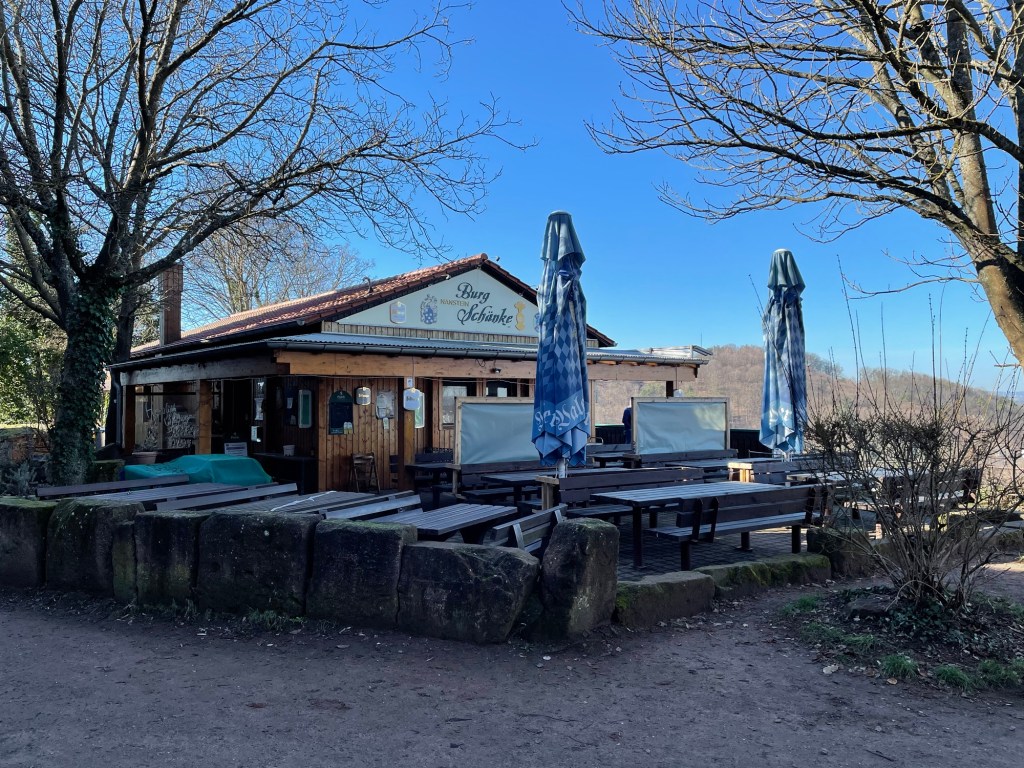
The community I’m a part of here in Germany is very Americanized. The area I live in is called Little America for good reason, but I still often find myself gazing out of this little German-American bubble I’m in, surprised at what I see on the other side of it. And though I returned back to the land of my birth for a quick week last summer, it wasn’t until my visit this July that really brought the differences to light.
The large expat community throughout the countries of Europe have made innumerable reels and posts about the cultural differences between their new home and their old. Learning to navigate tipping, trains, grocery stores, fashion, trash and recycling, language and the Ruhetag are all part of integrating oneself. We learn to slow down and enjoy the life we have in the place that we are. We get out of our cars for coffee and sit at communal tables for beers after hiking well kept trails. We learn to stare back, yield to the right, never cross the red Ampelmann. And we all laugh at ourselves as we stumble through the impasses we make along the way; embracing those of our local communities who take the time to embraces us (I’m looking at you J & C!).
Stepping out of the airport into the humid July heat of Virginia immediately made me appreciate the generally milder summers of Germany. Fighting through left lane cruisers and drivers traveling without intention made me appreciate the rule following of the Autobahn. The first sip of Starbucks made me cringe and crave a cappuccino from Barbarossa or Tchibo or any other little cafe. Even their pastries were lacking from the variety in the Bäckerei back home.
Everything looked strange – off – yet so familiar, like a moment of deja-vu. I’d certainly been here before, but so long ago, in some other time.
It really started to hit me, a week and a half in, while I was sitting on the patio of a Starbucks waiting for a friend to arrive. After setting up my iPad to write, I sat back in my chair to take in the scenery – only there really wasn’t any. It was a parking lot. Cars sped away from the drive-thru; the odor of pavement cooked by the morning sun clouding around me. There were no buskers displaying their talents in the pedestrian only zones. The noise of multiple languages, children playing in the fountains, church bells ringing out the time were all absent.
Inside, not a single soul glanced up from their tasks as we walked in. The staff only greeted us as we approached the register – their eyes acknowledged us, nods confirming our order was received, and a gesture towards the card reader with the total. My friend and I sat chatting about our travels, the euro life, the comparisons and differences of living overseas. It was in this moment that I knew I no longer belonged in this place. I realized that I felt lost among the crowd; unnoticed and blended in but so unfamiliar.
My roots may have been sprouted in American soil, but they have grown and thrived in German soil. I started to ache for home – the home of my making across the sea.
If you’re in my close social circle, you’ve probably received a reel or two highlighting a cultural stereotype: “truth,” I’ll say, and maybe add a story of my own experience. There’s something to be said about cultural stereotypes. They can be, and are, often true to a lesser extent than what we giggle about. Stereotypes of the American culture are that we are a loud, rude, selfish, and stupid bunch that can’t see past the borders of our own land and biases. We think the world revolves around us no matter where we are; that everyone must accommodate us: we are superior even when we haven’t experienced life beyond our own front doorsteps.
The German culture has a reputation for being stoic, straightforward, and generally without small-talk. They are practical people that drink beer, know bread, and are efficient. They value timeliness and honesty. And while this may or may not be somewhat true, there is also a piece of the culture that I think is only just now becoming more known with the influx of expats posting about their experiences on social media: the German will always greet you when entering a waiting room, store, or passing along the trails; they are loyal and devoted friends willing to laugh about their own ways, and also willing to guide you in your integration. The culture clings to a since of respect and politeness that, I feel, has long been discarded in my own culture. There is a sense of the whole versus the sense of the single self. It’s so substantial to the cultural that it’s been adapted into laws: Sunday’s are quiet days (Ruhetag). It’s a day of rest, gathering with family, spending time outdoors. There are no lawnmowers buzzing; no racing through the grocery store or spending your day at work. Majority of the shops are closed and you’ll see a larger amount of people walking the trails or grilling in their back gardens with their families. Many villages require an approval from the “village council” when buying your home to ensure the building isn’t needed for public service (school, kita, etc).
I’ve come to appreciate the greetings at my morning bakery stop. Each new customer that walks in greets the other customers and workers. In return, they are also greeted: “Moyer!” There is no need for small-talk. No need to fill the space with the noise of unnecessary conversation. There is something genuine in that: to be acknowledged, even ever so slightly. There’s a feeling of importance in greeting your fellow human without the need to know their political affiliations, their profession, their opinions – and then the judgements that come along with it.
A knife could have sliced through the tension I felt in the US. From the moment I landed until the moment I took off again, it was palpable. Often unspoken, it permeated like noxious fumes emitting from peoples eyes. And when it was spoken, it was loud and divisive; scary and unpredictable. And while there is no place that is perfect, I have never felt safer than I do in Germany.
I was asked by a friend that had also lived in Germany for some time if I had noticed any differences in what I had remembered; any impressions, or feeling that stuck out to me. There were many similarities is our observations, but she also put words to some things I was unable to organize in my emotions.
There is this near immediate feeling of overstimulation I seemed to have felt. Sure, I’m now used to the slower way of life in Germany, but it just seemed like so much more than that. She mentioned feeling overwhelmed at the amount of options at stores: the isle-long wall of cereal brands – an over-variety of the same thing, just different manufacturers. She described it as “over the top” and “wasteful”… and I agree. She described how everything was dirtier, more disheveled, and unkempt than she had remembered. She and her partner had an exceptionally difficult transition when they moved back, and are already making plans for the future to leave again.
Nowhere is perfect. Every place I have traveled to, I have observed things that I wasn’t so fond of. There was that time I stayed at a nice hotel on the Royal Mile in Edinburgh and the view from my room window was an abandoned church-turned-market that seemed to be the stoop for the local hoodlums, drinking and smoking; catcalling those who walked by; and the drunk passed out on the front patio. I’ll avoid the area we stayed in on our recent trip to Malta: it was dirty and crowded with clubs and people spilling out into the streets at all hours of the night. The next morning, one had to watch their step to avoid puddles of vomit and piss. But that Sicilian bakery on the corner had the best ricotta cornettos I’ve ever had. And all of the good, all of the culture, languages, experiences; all of the beauty, kind people, the slowing down and enjoying life make all of those other things seem so little. All of those things that I’m not fond of are less than the happiness felt outside of the rat race of the US.
I cannot imagine living my life any other way now.
 phoenix & magpie
Leave a comment